

You Didn’t Come to Bali to Feel Like This
You’ve been in transit for 18 hours. You survived the middle seat on a red-eye, the layover in Singapore where you ate something you shouldn’t have, and the taxi ride from Ngurah Rai airport where your driver insisted on taking “the scenic route.”
You made it to Bali. You’re supposed to be living your best life.
Instead, you feel like a swollen, exhausted sack of airplane recycled air.
Your ankles look like they belong to someone else. Your face is puffy. Your jeans don’t fit the way they did when you boarded. You’re simultaneously dehydrated and retaining what feels like three liters of mystery fluid. Your body feels heavy, slow, and generally disgusting.
Welcome to post-flight inflammation. And no, a nap and a coconut aren’t going to fix it.
But a lymphatic drainage massage in Bali might actually save your first three days.
What Actually Happens to Your Body on a Long Flight
The Cabin Pressure Situation
Airplane cabins are pressurized to the equivalent of 6,000-8,000 feet above sea level. Your body isn’t designed to sit motionless at that altitude for hours while breathing recycled air that has the humidity of the Sahara.
At this altitude, your blood oxygen levels drop slightly. Your body compensates by moving fluid around inefficiently. Meanwhile, the low humidity (usually around 10-20%) dehydrates you at a cellular level—even if you drank three bottles of water and avoided alcohol like a responsible adult.
Gravity + Immobility = Fluid Pooling
When you sit for hours, gravity pulls fluid down into your lower body. Normally, muscle movement helps pump that fluid back up through your lymphatic system. But when you’re crammed into a seat the width of a small child, barely moving for 8+ hours, that fluid just… stays there.
Your lymphatic system—the network responsible for moving waste and excess fluid out of your tissues—basically shuts down. It doesn’t have a pump like your heart does. It relies on movement, muscle contraction, and deep breathing to function.
After a long flight, you’ve had none of those things.
The Sodium-Carb Airport Food Factor
Airport food is aggressively salty. That croissant, the instant noodles, the snack mix—all loaded with sodium. High sodium intake causes your body to retain water to dilute the salt concentration in your bloodstream.
Add that to the already-compromised fluid balance from cabin pressure, and you’ve got a recipe for puffiness that won’t resolve on its own for days.
Cortisol, Adrenaline, and Travel Stress
Flying is stressful, even when it goes smoothly. Your body releases cortisol and adrenaline—hormones that cause inflammation and fluid retention. If you had a tight connection, a delayed flight, or a lost bag situation, that stress response is even more amplified.
So by the time you land in Bali, your body is inflamed, dehydrated, water-logged (somehow simultaneously), and running on stress hormones.
A good night’s sleep helps. But sleep doesn’t move stagnant lymph fluid. Sleep doesn’t drain the three-day backup of cellular waste sitting in your tissues.
Lymphatic drainage does.
What Is Lymphatic Drainage Massage (And Why It’s Not Regular Massage)
Lymphatic drainage is not a deep tissue massage. It’s not even a relaxation massage. It’s a physiological intervention.
How It Works
Your lymphatic system is a network of vessels that run parallel to your blood vessels. It collects excess fluid, toxins, and metabolic waste from your tissues and transports it to lymph nodes, where it gets filtered and eventually returned to your bloodstream.
But unlike your circulatory system, which has your heart to pump blood, the lymphatic system has no pump. It relies on:
- Muscle contractions
- Deep breathing
- External manipulation (massage)
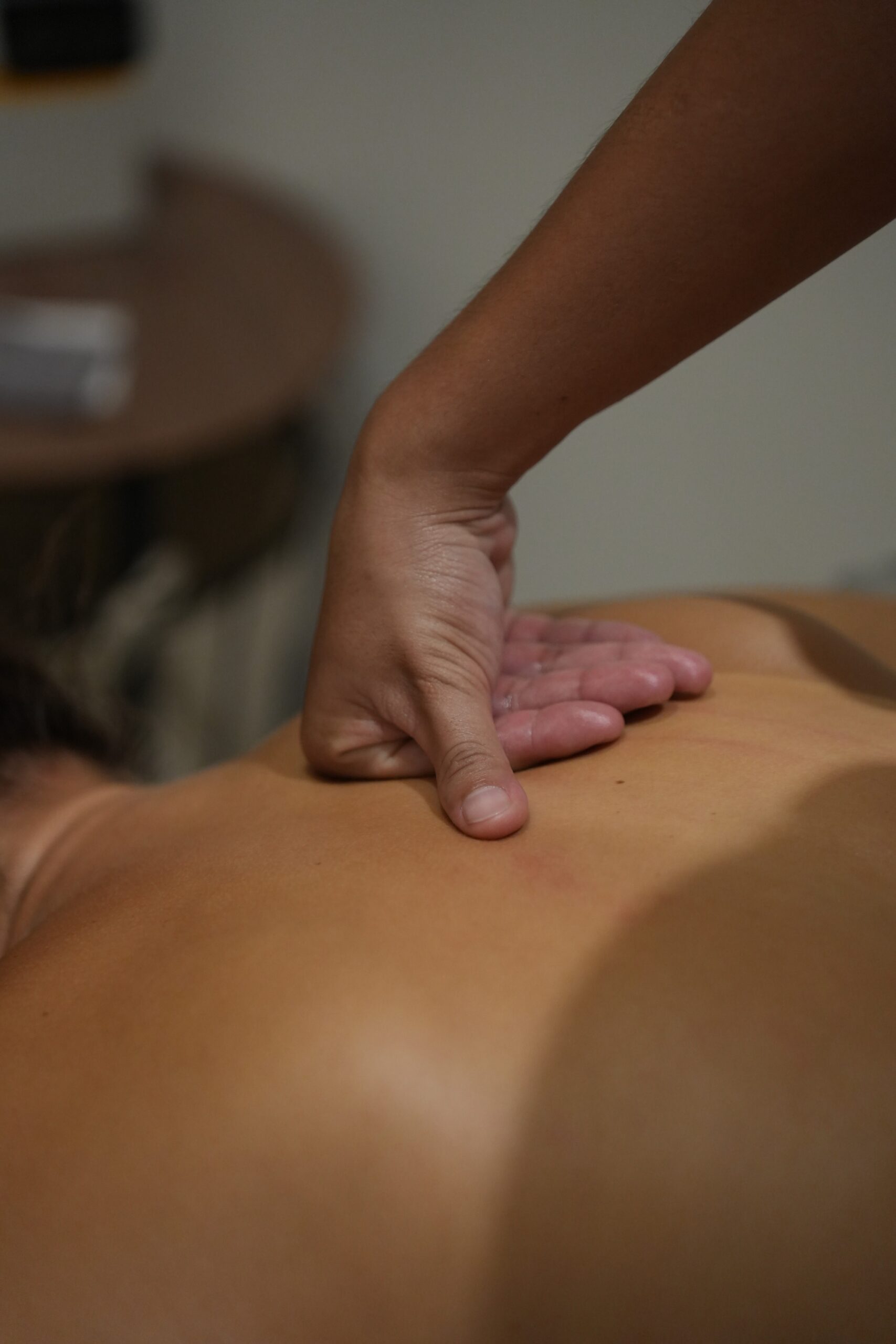
Lymphatic drainage massage uses very light, rhythmic strokes in specific directions to manually push stagnant lymph fluid toward your lymph nodes. The pressure is much lighter than a typical massage—barely more than the weight of your hand resting on your skin.
It sounds too gentle to do anything. But it’s incredibly effective because the lymphatic vessels are superficial—right under your skin. Deep pressure would actually compress them shut. Light pressure opens them and encourages flow.
What It Feels Like
If you’re expecting a “massage” in the traditional sense, you’ll be confused. There’s no kneading, no deep pressure, no cracking joints.
Instead, it feels like slow, deliberate, wave-like strokes. Some areas might feel slightly ticklish. The rhythm is meditative—almost hypnotic. You might wonder if anything is actually happening.
And then, about 30 minutes in, you’ll need to pee. Urgently. That’s the lymph fluid being released into your system and filtered by your kidneys.
By the end of the session, your body feels lighter—not relaxed in the sleepy way, but physically unburdened. Like someone deflated you slightly and everything works better now.
Why This Is the Perfect First Treatment After Landing in Bali
It Addresses the Root Problem
Most people book a Balinese massage or a foot massage when they arrive. Those are nice. They feel good. But they don’t address the physiological dysfunction that’s making you feel terrible.
You don’t need relaxation. You need drainage. You need to move the stagnant fluid that’s been sitting in your legs, face, and hands for the last 18 hours.
Lymphatic drainage targets that specific problem. It’s functional bodywork, not just self-care.
The Timing Window Matters
The first 24-48 hours after a long flight are when the lymphatic stagnation is most acute. If you wait three days, your body will eventually resolve it on its own—but you’ll have wasted three days of your Bali trip feeling puffy, sluggish, and jet-lagged.
If you get lymphatic drainage within 12-24 hours of landing, you accelerate the recovery process dramatically. What would take three days to resolve naturally can improve in 90 minutes.
It Helps with Jet Lag (Indirectly)
Jet lag isn’t just about sleep cycles. It’s also about inflammation, dehydration, and your body’s stress response to rapid time zone changes.
By reducing systemic inflammation and improving circulation, lymphatic drainage helps your body recalibrate faster. You’ll still need to adjust your sleep schedule, but you’ll feel less like a zombie while doing it.
You Can Actually Enjoy Your First Day
Most people arrive in Bali, check into their villa, and immediately crash for 12 hours. They wake up disoriented, still puffy, and lose most of their first day.
If you book a lymphatic drainage session on arrival day—late afternoon or early evening—you’ll feel dramatically better by dinner. You won’t waste your first evening sleeping through golden hour. You can actually go to that beach club, eat the nasi goreng, watch the sunset, and feel like a functional human.
What Happens During a Lymphatic Drainage Session at Korra Spa
The Consultation
Your therapist will ask about your flight duration, whether you have any injuries or medical conditions (lymphatic drainage isn’t suitable for people with certain heart conditions or active infections), and what specific issues you’re dealing with.
Be honest. “My ankles are the size of grapefruits and I haven’t pooped in two days” is useful information.
The Setup
You’ll lie on the massage table under a sheet. The room is kept slightly cooler than a typical massage room because lymphatic drainage doesn’t generate heat the way deep tissue does.
The therapist uses minimal oil—just enough to glide, not so much that they lose traction. The goal is precision, not slip.
The Sequence
Lymphatic drainage follows a specific anatomical pattern. You can’t just randomly push fluid around and hope it finds its way out.
The therapist starts by “opening” the major lymph node clusters—neck, armpits, groin. This creates drainage pathways. Think of it like opening the drain before you fill the sink.
Then they work systematically through your body:
- Neck and face: Reduces puffiness, sinus congestion, and that “airplane face” look.
- Arms and hands: Drains the fluid that makes your rings tight and your fingers sausage-like.
- Torso and abdomen: Stimulates digestive lymph nodes, which helps with the bloating and digestive sluggishness common after flying.
- Legs and feet: This is where most people notice the biggest difference. Swollen ankles, tight calves, and heavy legs start to feel normal again.
Each stroke is slow, rhythmic, and directional—always moving toward the nearest lymph node cluster.
The Mid-Session Bathroom Break
Around 45-60 minutes in, you’ll probably need to pee. This is not optional. Your kidneys are processing the lymph fluid that’s been released into your bloodstream.
Don’t be embarrassed. This is a sign the treatment is working. If you don’t need to pee, the drainage might not be moving effectively.
The Post-Treatment Feeling
Immediately after, you might feel slightly lightheaded or spaced out. This is normal. Your body just processed a backlog of stagnant fluid and metabolic waste.
Drink water. A lot of water. Your kidneys need it to flush everything out.
Within 2-4 hours, you’ll notice:
- Your face looks less puffy
- Your ankles are visible again
- Your clothes fit normally
- You feel physically lighter
- Your energy is better (not caffeinated-energy, but functional-human energy)
Some people feel the full effects the next morning after a night’s sleep. But most notice significant improvement within hours.
Lymphatic Drainage vs. Other Post-Flight Treatments
Why Not Just Get a Regular Massage?
A Balinese massage or deep tissue massage will feel good, but it won’t address lymphatic stagnation. In fact, deep pressure can sometimes push fluid into the tissues rather than out of them.
Regular massage is great for muscle tension and relaxation. But if your primary issue is fluid retention and inflammation, it’s not the most efficient solution.
Why Not Just Do a Foot Reflexology?
Foot reflexology is excellent for targeted pressure points and can help with overall relaxation. But it only addresses the feet and lower legs.
If you’ve got facial puffiness, tight hands, and abdominal bloating, reflexology won’t reach those areas. Lymphatic drainage is a full-body treatment that addresses systemic fluid retention.
Why Not Just Wait It Out?
You absolutely can. Your body will eventually resolve the lymphatic stagnation on its own, usually within 3-5 days.
But those are 3-5 days of your Bali trip. If you’re only here for a week, that’s half your vacation spent feeling suboptimal.
The question isn’t “Will my body fix this?” It’s “Do I want to lose three days of my trip waiting for it to happen naturally?”
Who Should Get Lymphatic Drainage After Flying
Ideal Candidates
- Anyone who flew more than 6 hours
- People prone to water retention or swelling
- Those with visible ankle or facial puffiness
- Anyone who feels “heavy” or sluggish post-flight
- People with digestive discomfort after traveling
- Those who want to maximize their first days in Bali
Who Should Skip It (Or Modify)
Lymphatic drainage is generally safe, but it’s not appropriate for:
- Active infections or fever (your lymph nodes are already working overtime)
- Congestive heart failure (can overload the circulatory system)
- Blood clots or deep vein thrombosis (could dislodge a clot)
- First trimester of pregnancy (second and third trimester are usually fine with modifications)
If you have any of these conditions, tell your therapist. They can modify the treatment or recommend an alternative.
How to Maximize the Benefits
Book It on Arrival Day
Don’t wait until day three when you’re finally feeling better. The whole point is to accelerate recovery, not celebrate it once it’s already happened.
Ideally, book your session for 4-6 hours after you land. This gives you time to check in, shower, and decompress, but still addresses the lymphatic stagnation while it’s acute.
Hydrate Before and After
Drink water before your session. Drink more water after. Your kidneys need it to process the lymph fluid that’s being released.
Coconut water is great too—it has electrolytes without the sugar bomb of sports drinks.
Avoid Alcohol for 12 Hours
Alcohol is dehydrating and inflammatory. It will counteract everything the lymphatic drainage is trying to accomplish.
Yes, the sunset beers at Finns are tempting. But if you wait 12 hours post-treatment, you’ll enjoy them more anyway because you’ll actually feel human.
Move Gently After the Session
Take a walk. Do some light stretching. Swim slowly. Movement helps keep the lymph flowing.
Don’t immediately return to your villa and lie motionless for four hours. Gentle activity enhances the treatment’s effectiveness.
Sleep Well That Night
Your body does a lot of its lymphatic processing during deep sleep. After a lymphatic drainage session, your system is primed for efficient detox overnight.
Get to bed at a reasonable hour. You’ll wake up feeling like a different person.
Why Korra Spa for Lymphatic Drainage in Bali
Trained Therapists Who Understand the Technique
Lymphatic drainage requires specific training. It’s not just “light massage.” The strokes, direction, and sequence matter.
Korra Spa’s therapists are trained in proper lymphatic drainage technique—not a generic “relaxation massage” that’s been rebranded.
Both Locations Are Convenient for Post-Flight Recovery
Korra Spa Berawa is close to most Canggu accommodations. If you’re staying in the Berawa/Pererenan/Canggu area, you can be there within 10 minutes.
Korra Spa Seminyak (Batu Belig) is ideal if you’re staying closer to Seminyak or if you’re coming straight from the airport and your villa is on that side of the island.
Both locations are open 9 AM – 11 PM daily, so you can book a session whenever your flight lands.
Berawa Location:
Jl. Pantai Berawa No.23
Open daily: 9:00 AM – 11:00 PM
Seminyak Location:
Jl. Batu Belig No.66,
Open daily: 9:00 AM – 11:00 PM
Get directions and book:
https://korraspa.com/bookings/
https://korraspa.com/location/
90-Minute Session = Full-Body Treatment
A 60-minute session can work, but 90 minutes allows your therapist to address your entire body thoroughly without rushing.
Post-flight lymphatic stagnation isn’t localized to one area. It’s systemic. You need time to drain the face, arms, abdomen, and legs properly.
You Can Combine It with Other Treatments
If you want to address both lymphatic drainage and muscle tension from sitting on a plane, you can request a combination session:
- 60 minutes lymphatic drainage
- 30 minutes gentle Balinese massage for shoulders and lower back
Or keep it simple and do straight lymphatic drainage. Your therapist will help you decide based on how you’re feeling.
View the full treatment menu:
https://korraspa.com/treatments/
The Brutal Truth About Post-Flight Recovery
Most people waste the first 2-3 days of their Bali trip feeling like garbage.
They’re puffy, exhausted, and vaguely unwell. They blame jet lag. They drink more coffee. They take naps that somehow make them feel worse. They assume this is just the cost of long-haul travel and they have to endure it.
But post-flight inflammation isn’t something you have to “push through.” It’s a physiological problem with a physiological solution.
Lymphatic drainage won’t magically erase jet lag or give you back the 18 hours you spent in transit. But it will give you back your first few days in Bali.
You didn’t fly halfway across the world to spend three days feeling swollen and sluggish.
You came here to surf, eat, explore, and feel good. Lymphatic drainage gets you there faster.
Book Your Post-Flight Recovery Session
Land. Shower. Deflate.
Book a lymphatic drainage session within 24 hours of landing:
https://korraspa.com/bookings/
90 minutes. One treatment. Three days of your trip saved.
Your puffy ankles will thank you.
